
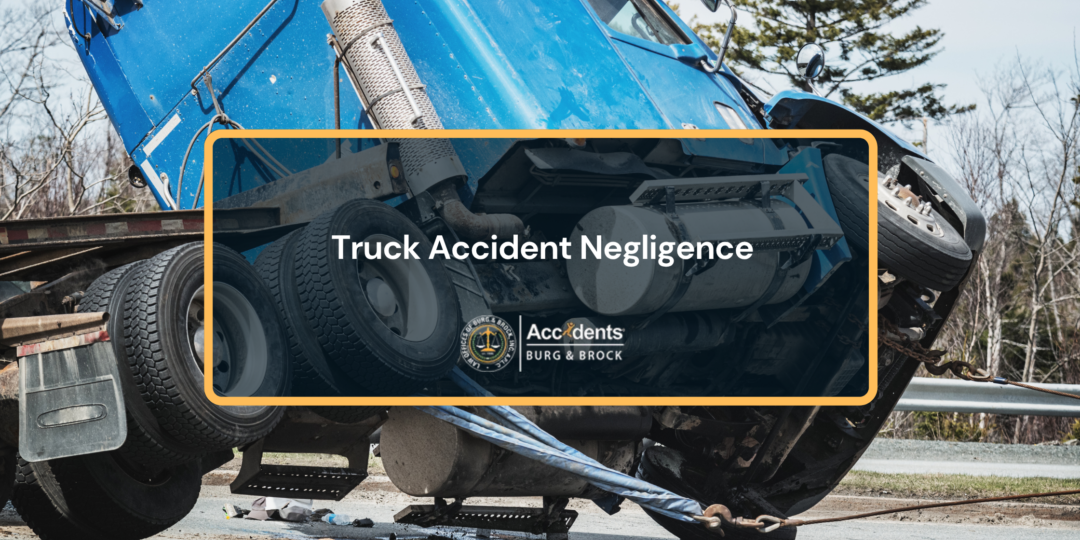
Truck accident negligence happens when a driver, trucking company, or another responsible party fails to act safely. That failure can lead to a serious accident, leaving victims dealing with injuries, financial losses, and other challenges. If you have been a victim, understanding who was negligent can help you determine who may be held accountable.
At Yadidi Law Group, car and truck accident cases are at the core of our practice. Founder Cameron Yadidi has represented injured clients since establishing the firm in 1996 and has experience handling claims involving truck accidents and negligence. If you believe negligence caused your truck accident, contact us for a free consultation to discuss your legal options.
This article explains truck accident negligence, how it is established, and the evidence that may help prove it.
What Is Negligence in a Truck Accident?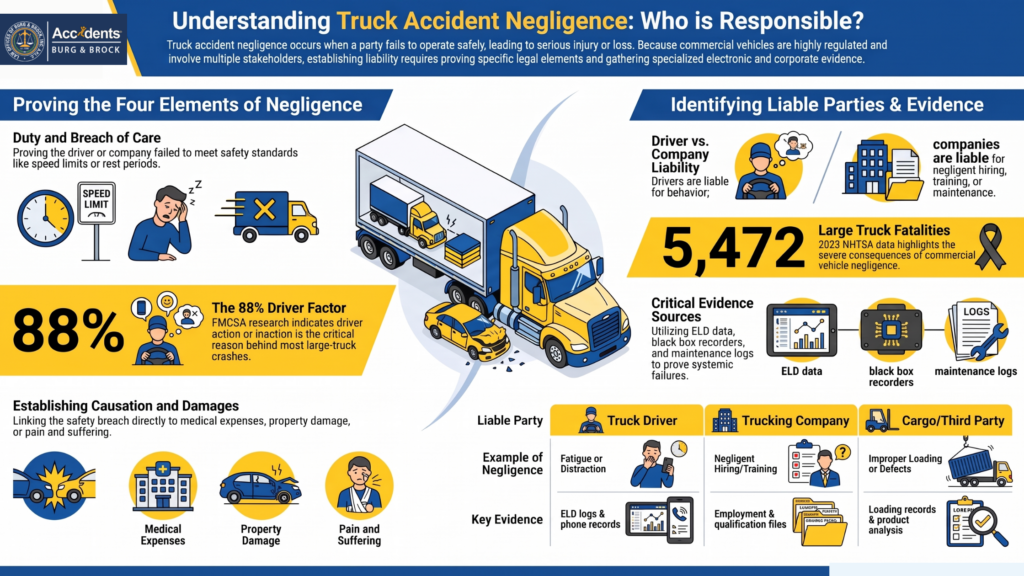
Because commercial trucks are so large and heavy, drivers and trucking companies must operate them safely. They must use reasonable care to protect everyone sharing the road. That means regular inspections, careful hiring, proper training, and compliance with safety regulations. When a driver or another responsible party falls short of that duty and causes an accident, their actions may be considered truck accident negligence.
Negligence in a truck accident can carry far heavier consequences than in an ordinary car accident, and the numbers back that up. NHTSA reported 5,472 deaths from crashes involving large trucks in 2023 alone. And most of those killed weren’t even in the truck. Because commercial trucks are larger and heavier, drivers and trucking companies must comply with additional federal and state safety requirements.
These cases can also be more complex because several parties may have contributed to the crash. Important evidence, including driver records, electronic data, and maintenance documents, may also be controlled by the trucking company. This can add another layer of complexity when determining what caused the accident and who may be responsible.
How Is Negligence Determined in a Truck Accident?
Negligence in a truck accident is usually established by proving four key elements: duty of care, breach of duty, causation, and damages. Truck drivers and trucking companies have a duty to operate safely and protect others on the road. Traffic laws and federal and state trucking regulations can help define what safe conduct requires.
These standards may include following speed limits, carefully screening drivers before hiring, and conducting routine vehicle inspections. A breach occurs when a driver or company fails to meet those standards through actions such as speeding, distracted driving, hours-of-service violations, or poor vehicle maintenance.
However, proving that someone acted carelessly is not enough on its own. You must also show that the negligence contributed to the accident and caused your injuries or other losses. Evidence such as police reports, witness statements, ELD, maintenance records, video footage, and accident reconstruction may help establish that connection. Finally, you must show damages. These damages mean legally recognizable losses, like medical expenses, property damage, or pain and suffering.
For example, imagine a truck driver ignores required rest periods and keeps driving while fatigued. That’s not a rare hypothetical. FMCSA’s Large Truck Crash Causation Study found driver action or inaction was the critical reason behind 88% of large-truck crashes, with fatigue a recurring factor. The driver eventually falls asleep and crashes into another vehicle, leaving the other driver with serious injuries and medical bills. In that situation, the driver may have breached the duty to operate safely. If that breach caused the crash and the resulting losses, those facts may help establish negligence.
What Are the Common Examples of Truck Accident Negligence?
Driver negligence is one of the most common causes of truck accidents. A driver may become fatigued after spending too many hours behind the wheel or failing to take required rest breaks. This often happens because of pressure to meet tight delivery schedules. Fatigue can also lead to unsafe driving decisions.
Other forms of driver negligence include texting, using a phone, speeding, following too closely, making unsafe lane changes, or failing to adjust to traffic and weather conditions. Driving while impaired by alcohol, drugs, or certain medications can also put other road users at risk.
Traffic law violations may also indicate negligent driving. For instance, a truck driver may run a red light, make an improper turn, or ignore other traffic rules. These mistakes can be dangerous because commercial trucks need more time and distance to stop. Even a seemingly minor driving error can have serious consequences when a large truck is involved.
Negligence does not always happen behind the wheel. Poor vehicle maintenance can cause brake failures, tire blowouts, defective lights, steering problems, and other dangerous mechanical issues. Improperly loaded or secured cargo can also make a truck unstable or allow cargo to shift during transport. When required inspections, repairs, loading procedures, or safety checks are ignored, the driver, trucking company, or another responsible party may have contributed to the accident.
Who Can Be Held Liable for Truck Accident Negligence?
A truck accident may involve more than one liable party. Investigators often look first at the truck driver, but the trucking company, maintenance providers, cargo companies, or manufacturers may also have contributed to the crash. Determining liability requires a close look at each party’s role before and during the accident.
The Truck Driver
A truck driver may be liable when negligent driving caused or contributed to an accident. This may include driving while fatigued, speeding, driving while distracted or impaired, and reckless driving. The driver may also be responsible for ignoring traffic laws or failing to adjust to unsafe road conditions. If their actions fell below the expected standard of care, that may help establish negligence.
The Trucking Company
In addition to the driver, the trucking company may also be held responsible for an accident. Under the legal principle of respondeat superior, an employer may be liable when its driver’s negligence caused the accident while the driver was performing their job. Whether that principle applies depends on the driver’s working relationship with the company and the circumstances of the accident.
A company may also be directly liable for its own negligent conduct. For example, they may have hired an unqualified driver, provided inadequate training, failed to supervise drivers, maintained vehicles poorly, or ignored unsafe practices. Federal safety guidance places significant emphasis on hiring, qualifications, training, and compliance with safety responsibilities.
Third-Party Liability
Other parties may also share responsibility for a truck accident. A manufacturer, for example, could be liable if a defective truck or vehicle part contributed to the crash. A maintenance or repair provider may also be responsible if poor work created a dangerous mechanical problem or failed to fix one.
Liability may also extend to cargo loading companies, trailer owners, and leasing companies, depending on what caused the accident. Improperly loaded or secured cargo can make a truck unstable and create serious risks on the road. For that reason, federal rules impose strict requirements for cargo securement and inspections.
A close review of each party’s actions can help determine whether their negligence contributed to the accident and whether they share legal responsibility. The table below shows how each party could be liable.
Potentially Liable Parties in a Truck Accident
| Potentially Liable Party | Example of Negligence | Evidence That May Help Prove Negligence |
|---|---|---|
| Truck Driver | Fatigue, speeding, distraction | ELD data, police reports, phone records |
| Trucking Company | Negligent hiring or supervision | Driver qualification and employment records |
| Maintenance Provider | Improper repairs or missed maintenance | Inspection and repair records |
| Cargo Company | Improper loading or securement | Bills of lading and loading records |
| Manufacturer | Defective truck or vehicle part | Product records and expert analysis |
What Evidence Can Prove Truck Accident Negligence?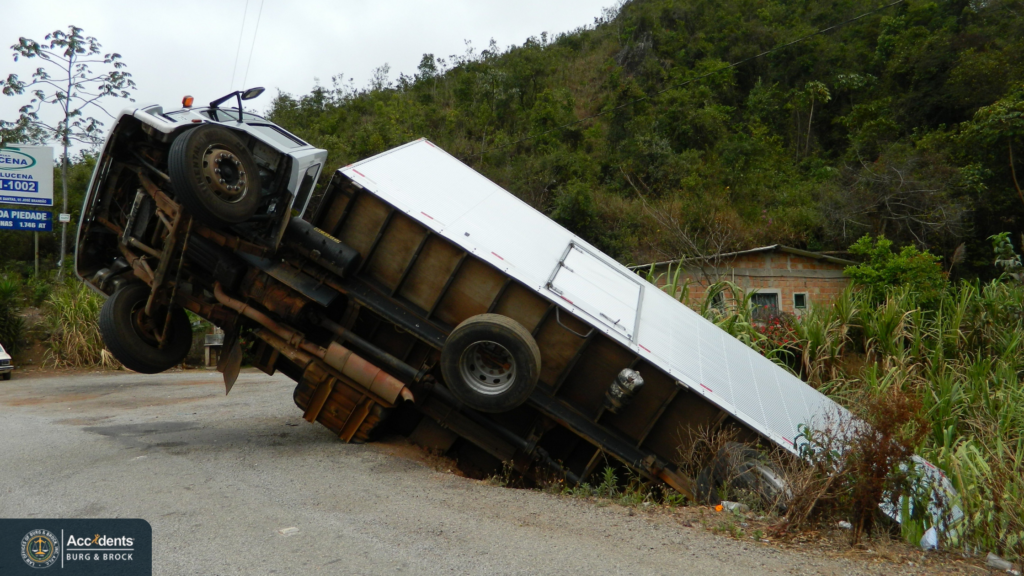
There is several evidence that can help show how a truck accident happened and whether negligence played a role in it. Electronic logging device (ELD) data may show how long the driver was on the road, when they took rest breaks, and the truck’s location before the crash.
This information may uncover possible hours-of-service violations. A truck’s black box or event data recorder can also provide useful details, including vehicle speed, braking activity, throttle use, and how the truck was operating before the collision.
Other records may provide a clearer picture of the driver and trucking company’s actions. Driver qualification files, training records, driving history, drug and alcohol testing records, and dispatch communications may reveal whether proper safety procedures were followed. Maintenance and inspection records can also be important. They may show whether the truck had known mechanical problems, missed inspections, or repairs that were delayed or performed improperly.
Evidence outside the trucking company’s records can also help establish what happened. Police reports, witness statements, traffic or dashcam footage, accident scene photos, cell phone records, and accident reconstruction may all provide valuable information. This evidence, along with company records, may be lost or overwritten if it is not preserved quickly. An attorney can help request and retain it, reducing the risk that important information becomes unavailable during the investigation.
How Do Federal Regulations Affect Trucking Negligence Claims?
Federal trucking regulations set safety standards that commercial drivers and trucking companies must follow. These rules cover driving hours and required rest periods, driver qualifications, vehicle inspections, maintenance, drug and alcohol testing, and cargo securement.
When investigating a truck accident, these requirements can help determine whether the driver or another party met their safety responsibilities. A violation may indicate conduct that fell below the expected standard of care.
However, violating a federal safety rule does not automatically establish negligence in every case. The violation must still be examined alongside the facts of the accident and the applicable state law. In some situations, a regulatory violation may support a claim of negligence per se, meaning the violation itself may help establish a breach of duty. Whether this doctrine applies depends on the law in the state where the claim is brought and the circumstances of the accident.
What Compensation Can You Recover After a Truck Accident?
If your truck accident was due to someone else’s negligence, you might be able to get compensation for your financial losses. This is often referred to as economic damages, which can cover things like medical bills, future treatments, lost wages, and damage to your property. The goal here is for the compensation to reflect how the accident has financially impacted you and may keep affecting you down the road.
You can also pursue compensation for losses that are a bit tougher to put a number on. This is called non-economic damages and might include things like pain and suffering, emotional distress, or even a loss of enjoyment in life. How much you can claim will depend on various factors, like the seriousness of your injuries, what kind of medical care you might need in the future, the insurance coverage available, and how strong your evidence is. Plus, the number of people who could be responsible for the accident and how much fault lies with you can play a big role in all this.
Sometimes, there can be multiple parties at fault in a truck accident. For instance, the driver could have been negligent while the trucking company may have failed to maintain the truck properly. In cases like these, rules around comparative or shared fault can affect how compensation is calculated. The impact of shared responsibility depends on the facts of the accident and the state law that applies to your claim.
What Happens During a Truck Accident Negligence Claim?
A truck accident negligence claim usually begins with a thorough investigation of what happened. The process may vary depending on the facts, but these are some of the steps that may be involved.
1. Investigating the Accident
The first step is to determine how and why the accident happened. This may involve reviewing the accident scene, police reports, vehicle damage, and other available information. The goal is to identify the actions or failures that may have contributed to the crash.
2. Identifying Potentially Liable Parties
More than one party may be responsible for a truck accident. The investigation may examine the truck driver, trucking company, maintenance provider, cargo company, or another third party. Identifying every potentially liable party can be important when determining who contributed to the accident.
3. Collecting and Preserving Evidence
Evidence plays a major role in proving negligence. It may include driver records, electronic data, maintenance documents, video footage, and witness statements. Preserving this information early can be important because some records or footage may later become unavailable.
4. Evaluating Injuries and Damages
The next step is to assess the losses caused by the accident. This may include current medical expenses, future treatment needs, lost income, reduced earning ability, and non-economic losses. The full impact of serious injuries is not always immediately clear.
5. Filing an Insurance Claim
Once the available evidence and losses have been evaluated, a claim may be submitted to the appropriate insurance company. This often involves submitting supporting evidence and negotiating liability and compensation. Insurers may dispute fault, the extent of your injuries, or the value of your claim.
6. Filing a Lawsuit When Necessary
If the parties cannot reach a fair resolution, filing a lawsuit may become necessary. The case may then enter discovery, during which both sides exchange information and evidence. Settlement negotiations can continue throughout the process, but unresolved cases may eventually proceed to trial.
How Can a Truck Accident Lawyer Help You?
A truck accident lawyer can investigate the crash to determine what happened and who may be responsible. This may involve reviewing police reports, examining the accident scene, speaking with witnesses, and gathering available video footage. Your lawyer may also investigate the truck driver, trucking company, and other parties that may have contributed to the accident. This can include checking for negligent hiring, poor training, unsafe scheduling, maintenance failures, or other safety violations.
A lawyer can also work to preserve important trucking evidence before it becomes unavailable. This may include ELD data, black box information, driver records, maintenance documents, dispatch communications, and inspection records. They can review federal and state safety requirements and identify violations that may support your negligence claim. When the cause of the crash is disputed, an attorney may also work with accident reconstruction specialists or other experts to determine what happened. They can then calculate your current and future losses, handle negotiations with insurers, and pursue a lawsuit if a fair settlement cannot be reached.
For example, suppose a truck crashes into a car after the driver suddenly moves into another lane. The trucking company may claim the driver was alert and following all safety rules. But an attorney investigating the crash may uncover electronic logging data showing that the driver had exceeded required driving hours. Maintenance records could also reveal that the truck had a steering problem that was reported but never repaired. By connecting these records with other evidence, the attorney may identify both driver and company negligence and pursue compensation from the parties responsible.
How Can Negligence in Truck Accident Be Prevented?
Truck drivers can help prevent negligence by following required rest schedules and avoiding distractions or impairment. They should obey traffic laws, maintain a safe following distance, and adjust their speed for road and weather conditions. Drivers should also complete required vehicle inspections and promptly report mechanical problems. These steps can reduce the risks associated with fatigue, unsafe driving, poor visibility, and equipment failures.
Trucking companies also play a major role in preventing negligence. They should carefully screen and hire qualified drivers, provide adequate training, and enforce clear safety policies. The payoff is worth it. FMCSA data shows large-truck crash deaths fell 11% in 2023, dropping to their lowest point in six years, a trend largely credited to stronger compliance and industry-wide safety enforcement. Regular supervision can help identify unsafe practices, while reasonable schedules can reduce pressure to violate rest requirements.
Companies should maintain trucks and equipment and conduct regular inspections to identify defects before they cause a crash. Following applicable federal and state safety requirements provides another layer of protection by setting standards for driver qualifications, operating hours, vehicle condition, and other safety practices. Compliance cannot prevent every accident, but it can reduce many risks that lead to preventable truck crashes.
Are You Unsure Whether Negligence Caused Your Truck Accident?
Truck accident negligence may involve the driver, trucking company, or another third party. Determining who was responsible often requires evidence such as driver records, ELD data, maintenance documents, video footage, and witness statements. Trucking regulations and multiple potentially liable parties can also make these claims more difficult to assess.
If you are unsure what caused your accident, legal guidance can help you understand your options. An attorney can review the available evidence, identify potentially responsible parties, and explain how applicable trucking rules may affect your claim. Acting early can also help preserve evidence that may become unavailable later.
At Yadidi Law Group, car and truck accident cases are central to our practice. Our team in California has represented injured people since the firm opened in 1996. If you believe negligence caused your truck accident, contact us for a free case evaluation to discuss your case and legal options.
Frequently Asked Questions
Proving negligence in truck accident cases can be complicated. Below are answers to some common questions about the topic.
What Is Truck Accident Negligence?
Truck accident negligence occurs when a driver, trucking company, or another party fails to use reasonable care and causes an accident that results in injuries or other losses.
What Are the Four Elements of Negligence in a Truck Accident Claim?
The four elements are duty of care, breach of duty, causation, and damages. A successful negligence claim generally requires evidence supporting each of these elements.
What Are Common Examples of Truck Accident Negligence?
Common examples include driver fatigue, distracted driving, speeding, impaired driving, traffic violations, poor vehicle maintenance, and improperly loaded cargo.
What Evidence Can Prove Negligence in a Truck Accident?
Evidence may include police reports, witness statements, ELD data, truck black box data, maintenance records, video footage, company records, and expert testimony.
Can a Trucking Company Be Liable for a Truck Driver’s Negligence?
A trucking company may be liable for a driver’s actions in certain circumstances. It may also face direct liability for negligent hiring, training, supervision, scheduling, or vehicle maintenance.
Who Else Can Be Held Liable for a Truck Accident?
Depending on the circumstances, liable parties may include maintenance providers, cargo loading companies, truck or parts manufacturers, trailer owners, or other third parties.
Disclaimer: Attorney Advertising. This article is for general informational purposes only and does not constitute legal advice. Truck accident laws, liability rules, deadlines, and available compensation can vary by state and depend on the specific facts of each case. The information provided should not be used as a substitute for advice from a qualified attorney. If you have been involved in a truck accident, consider speaking with an attorney about your circumstances and legal options.


