
The truck accident claim process involves filing a claim and reaching a fair settlement or verdict after a commercial truck accident. These cases can be more complex than a car accident claim because they may involve multiple liable parties and strict federal deadlines. Knowing what to do at each stage helps you protect your claim and avoid costly mistakes.
At Yadidi Law Group, handling accident and personal injury cases is at the core of our practice. We’ve handled serious truck accident cases across Los Angeles since 1996. We understand how complex truck accident cases can get. If you or someone you know has been in a truck accident, contact us today for a free consultation.
In this blog, we’ll cover the step-by-step process for filing a truck accident claim, common mistakes to avoid, and the compensation you may recover.
What Are the Steps to Take When Filing a Truck Accident Claim?
According to research from IIHS, in 2024 alone, 5,340 people died in crashes involving large trucks, and 62% of them were occupants of passenger vehicles. Behind every number like that is a family trying to figure out what comes next. Below are the steps you can follow.
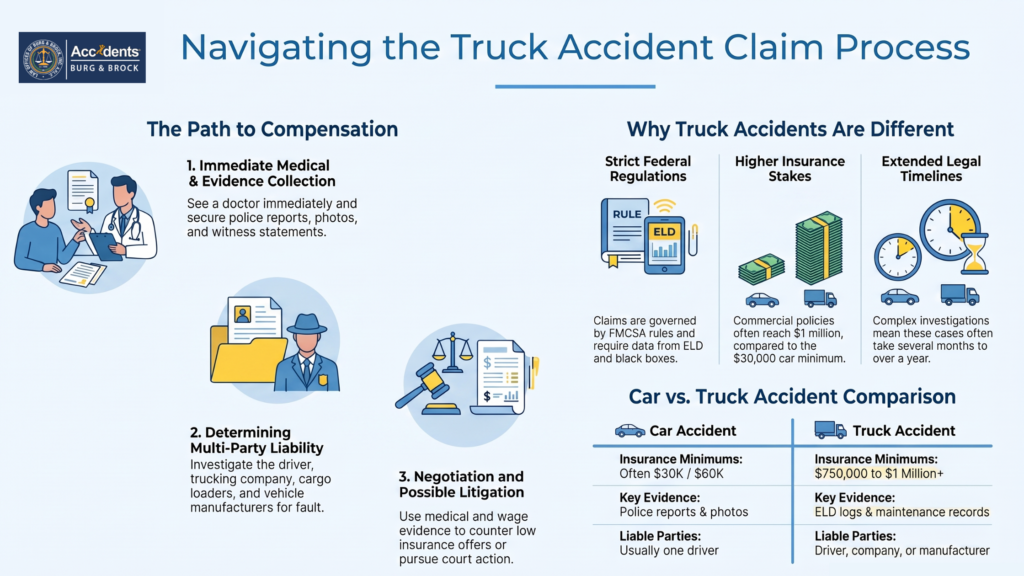
Step 1. Seek Medical Attention:
If you’ve been in an accident, see a doctor right away, even if you feel fine at first. Sometimes, adrenaline can hide your injuries for hours or days. Having a medical professional evaluate you protects your body and creates a medical record that links your injuries directly to the crash. This record can be useful during the claims process.
Step 2. Gather Evidence:
The evidence you can present after the accident determines if your claim will be considered. If you can, gather evidence such as police reports, photographs of the accident scene, vehicles, and injuries, witness names and statements, and medical records. Investigations in truck accidents may also involve examining driver logs and maintenance records.
Step 3. Determine the Liable Parties:
In truck accidents, multiple parties can be at fault. Liability can fall on the driver for distracted driving, the trucking company, or a cargo loader. If the crash was caused by mechanical failure, even the vehicle manufacturer can be liable. That is why the investigation must look beyond the driver. Finding every responsible party matters, because it usually means more sources for insurance coverage.
Step 4. Begin the Claims Process:
When the responsible parties have been identified, your attorney can file a claim with the appropriate authorities. Your claim should explain what happened, detail your injuries, and outline the damages you are seeking.
Each state has its own filing deadlines, so acting promptly is important. In California, for example, most personal injury lawsuits have a two-year statute of limitations from the time of the accident. Claims involving government entities might have shorter deadlines, and missing this deadline can prevent you from pursuing your case.
Step 5. Evaluate Your Damages:
The value of your claim usually depends on the financial and personal losses caused by the accident. This can include medical expenses, lost income, and fair compensation for pain and suffering. When you have a clear record of these losses, it helps you know what to expect.
Step 6. Negotiate With the Insurance Company:
Not every truck accident case must go to court. Most of these accident claims settle through negotiation. But insurance companies may start with an offer that does not fully reflect your losses. So avoid accepting a settlement before you understand the extent of your damages.
Your attorney can review the offer and present a counteroffer supported by medical records, wage statements, and expert assessments. With this evidence, the insurer has a clearer basis for evaluating your claim, and it can strengthen your position during negotiations. The evidence you present is usually what determines how quickly they raise their offer.
Step 7. Pursue Litigation If Necessary:
If you’re unsatisfied with the outcome of negotiations, then you can pursue litigation. This does not necessarily mean the case will go to trial. Many claims settle after both sides exchange evidence and assess their positions. However, if you have a legal team prepared to present your case in court, it can strengthen your position and encourage the insurer to take settlement negotiations seriously.
Why Are Truck Accident Claims More Complex than Car Accidents?
Car accident claims are often less complex than truck accident cases. This is because truck accident claims may involve several parties, bulky evidence, and federal regulations that don’t apply to regular car accidents. Commercial trucks are heavily regulated by the Federal Motor Carrier Safety Administration.
Trucking companies also carry much larger insurance policies, and they often have legal teams investigating the crash. These differences can shape your claim. From what evidence matters to how long it takes to resolve the case. Here’s how the two compare.
| Factor | Car Accident Claim | Truck Accident Claim |
|---|---|---|
| Liable parties | Usually involves one driver | Could involve the driver, trucking company, cargo loader, or the manufacturer |
| Insurance Minimums | Often state minimums (California: $30K/$60K) | Often $750,000 to $1 million or more under federal rules |
| Governing Rules | State traffic law | State law plus federal FMCSA regulations |
| Key Evidence | Police report, photos, witness statements | All of the above, plus ELD logs, black box data, maintenance records |
| Investigation | Usually one insurance adjuster | Reconstruction experts and the trucking company’s legal team |
| Typical Timeline | Weeks to a few months | Several months to over a year |
Notice the gap in the insurance claim. California requires only $30,000 for per-person injury coverage for regular drivers, according to the California DMV. While commercial trucking policies are usually much larger.
What Are the Common Mistakes to Avoid When Filing a Claim?
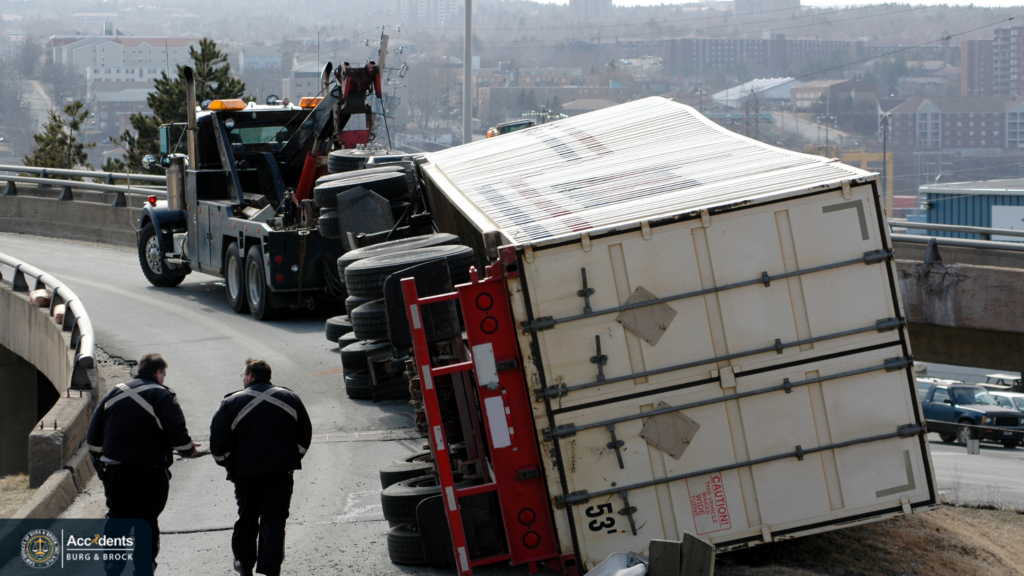
A truck accident claim process can be stressful and overwhelming, especially when you have to deal with your injuries as well. This can lead to mistakes that hurt your claim. For example, if you wait too long to get help, evidence can disappear. Truck electronic data and black box information can be lost if not preserved promptly. Memories can fade, and legal deadlines may pass you by.
When an offer is made, you need to understand whether it covers all your damages. Accepting the first offer can be risky, since early settlements are almost always lower than what your claim is really worth. Another common misstep is giving a recorded statement without a lawyer. Insurers are good at asking questions that can implicate you.
Even if you feel okay, follow up with medical care and show up to all your appointments. Gaps in treatment give insurers a reason to argue that your injuries aren’t serious.
With social media, victims might rush to post about the incident. Avoid doing this because insurers routinely check social media and can twist a single photo or comment to undercut your claim, even when your post was harmless. These mistakes are avoidable. A little caution in the first few weeks can make a real difference in what you ultimately recover.
How Long Does a Truck Accident Claim Take?
Truck accident claims can take several months to years. The timeline depends heavily on the complexity and facts of your case. A claim with clear fault can resolve in a matter of months. While cases involving disputed liability, serious injuries, or multiple defendants often take a year or longer. Driver fatigue plays a role in roughly 13% of truck crashes, according to FMCSA research, and fatigue-related cases often involve more investigation, which can extend the timeline.
If you’re lucky to negotiate with cooperative insurers, your claim can settle much faster than with insurers that stall or lowball every offer. And if your case goes to court, litigation adds months, sometimes years, before a final resolution.
What Are the Compensations You Can Recover?
While compensation doesn’t take the pain of an accident away, it can at least help you sort some bills. Truck accident victims may recover compensation for financial losses, physical and emotional harm, and, in rare cases, punitive damages. Compensation usually falls into three categories.
1. Economic Damages:
Economic damages aim to cover the financial losses caused by the crash. They may include emergency treatment, surgery, physical therapy, medication, and future medical care. If the accident affected your ability to work, you may also recover lost wages and reduced earning capacity. Repair for vehicle damage, replacement costs, and other accident-related expenses may also be added to economic damages. Documenting all losses is essential to recovering damages.
2. Non-Economic Damages:
Sometimes your damages cannot be measured with an invoice. These losses can include pain and suffering caused by the accident, emotional distress, loss of enjoyment of life, and the impact of serious injuries on your daily activities and relationships.
3. Punitive Damages:
Punitive damages are different from compensation for your actual losses. But if the defendant’s conduct was especially reckless or intentional, then it may apply. They are designed to punish particularly serious misconduct rather than reimburse you for medical bills or lost income.
How Can a Truck Accident Attorney Help?

Filing a truck accident claim on your own can be overwhelming, especially while you’re recovering from injuries. You’re expected to gather evidence, track deadlines, and negotiate with insurers, all while healing physically and emotionally. One missed form or late filing can cost you thousands in compensation.
Truck accident cases are really complex, which is exactly why an attorney matters. Multiple parties, like the driver, trucking company, and cargo loader, may share liability, and each often has its own legal support working against you. A truck accident lawyer can help you investigate federal violations, preserve important evidence, and calculate the true value of your claim. They also know how to counter lowball offers with real documentation, so you don’t settle for less than you deserve.
Imagine a driver who was rear-ended by a fatigued trucker on the 405, suffering a spinal injury that required surgery. While handling the claim alone, they accepted a quick $50,000 offer to cover their immediate bills. As more expenses piled up, they had no way to pursue further compensation, since the settlement had already closed their case.
Now imagine another driver in the same situation, who chose to work with an attorney instead. Their legal team investigated the crash, uncovered hours-of-service violations, and secured the truck’s black box data to prove the driver had been fatigued. They built a case around the driver’s long-term care needs, not just the bills already on the table. As a result, they negotiated a settlement that covered ongoing treatment and lost income, far beyond the initial offer. That’s the difference an experienced attorney can make.
Ready to Begin Your Truck Accident Claim?
Are you considering filing a truck accident claim? Truck accident claims move quickly, and the stakes are often much higher than in a typical car accident. Every step counts, from collecting evidence and determining who’s responsible to dealing with insurance companies. It’s easy to make small mistakes, like accepting a fast settlement or skipping follow-up medical care. Those choices can cost you thousands.
Knowing what to expect can help you protect your claim and avoid the common traps that catch many people off guard. A good attorney can help you to gather evidence before it’s lost. They can also spot violations that can make your case stronger and push for compensation that covers everything you’ve lost.
At Yadidi Law Group, our team in California has represented truck accident victims since 1996. We don’t back down against trucking companies or their insurers, and we prepare every case as if it will go to trial. Reach out to us today for a free consultation, and let us help you through the claims process.
Frequently Asked Questions
The truck accident claim process can get really confusing. Below are answers to some common questions victims might have.
How Long Does a Truck Accident Claim Take?
Simple cases with cooperative parties can be resolved in a few months. Complex or disputed claims often take a year or more, especially when litigation is involved.
What Evidence Do I Need for a Truck Accident Claim?
Evidence in a truck accident may include the police reports, photos, witness statements, medical records, and the truck’s driver logs and maintenance history. Every piece of evidence matters.
Can I File a Claim Without a Lawyer?
Yes, you can. But trucking companies bring experienced legal teams to every case. An attorney levels the playing field and usually recovers far more than victims can on their own.
Who Can Be Held Liable in a Truck Accident?
Many parties can be liable. The driver, the trucking company, a cargo loader, or the vehicle manufacturer can all share responsibility, depending on what caused the crash.
What if I Don’t Agree With My Settlement Offer?
You’re not required to accept it. Your attorney can negotiate further or take the case to court if the offer doesn’t reflect your actual damages.
Disclaimer: This blog is for informational purposes only and does not constitute legal advice. Reading it does not create an attorney-client relationship with Yadidi Law Group. Past results, including any case outcomes referenced here, do not guarantee a similar outcome in your case, and hypothetical examples are for illustrative purposes only. This blog may be considered attorney advertising. Please consult a licensed attorney directly for advice on your specific situation.


